<span style='color:red'>Intel</span> 18A Yields Up 7%–8% Monthly as 2H26 Customers Expected; Said to Push 18A CPUs Amid Shortages
  Intel’s turnaround appears to be gaining momentum. According to CNBC, Intel CEO Lip-Bu Tan said the company’s foundry business is making progress, with 18A process yields now improving by 7% to 8% per month, signaling advancement from earlier challenges.  More significantly, Tan said the improvements are beginning to attract customer interest, with Intel expecting commitments from multiple foundry customers in the second half of 2026, the report highlights. The remarks align with earlier comments from CFO David Zinsner, who said signals from external foundry customers would become “more concrete” in the second half of the year and into early 2027.  Intel Reportedly Pushes 18A CPUs Amid Supply Tightness  Recent CPU shortages have also brought renewed attention to Intel, which is reportedly promoting processors built on its 18A technology. According to Nikkei, sources say Intel is encouraging key PC partners across the U.S., China, and Taiwan to increase adoption of CPUs produced using the process, which only became available late last year.  Sources add that the company has prioritized supply of chips based on its older Intel 7 process for server and industrial applications. Intel’s push to promote its most advanced chips comes as it seeks to capitalize on the AI race and regain leadership in advanced chipmaking, the report adds.  14A Seen as Intel’s Next Push Against TSMC  Beyond 18A, according to CNBC, Tan said Intel’s next-generation 14A process could eventually compete with TSMC, adding that it is expected to arrive around the same time as TSMC’s comparable technology — a development he described as a “major, major breakthrough.” As noted by Wccftech, Tan said Intel expects risk production for its 14A technology in 2028, followed by volume production in 2029, placing its timeline alongside TSMC’s. He added that multiple customers are already engaging with Intel as the company has made its 0.5 PDK available.  EMIB Shows Early Customer Commitment as Substrate Prepayments Emerge  Another major technology highlighted by Lip-Bu Tan is EMIB, which he described as one of the most advanced chip packaging technologies. According to Wccftech, Tan said customer commitment has become evident, with some customers even prepaying for substrates to secure supply amid ongoing shortages.  Wccftech notes that EMIB was recently said to have reached 90% yields. By contrast, Commercial Times notes that TSMC’s CoWoS currently mass-produced 5.5-reticle-size version — the world’s largest today — has already achieved yields of 98%.
Key word:
Release time:2026-05-20 11:32 reading:331 Continue reading>>
First <span style='color:red'>Intel</span> Wildcat Lake Laptops Near Launch; Reportedly Built on 18A, Taking Aim at Apple’s MacBook Neo
  The first laptops powered by Intel’s “Wildcat Lake” Core Series 300 processors for the entry-level PC segment are reportedly nearing launch. According to Wccftech, Intel Core Series 3 laptops could hit retail shelves as early as next week, with initial models including 14-inch and 16-inch designs from Honor and ASUS, while more OEMs are expected to follow.  Chinese media outlet Mydrivers notes that the Honor Notebook X14 2026 Combat Edition will be the first commercially available laptop based on Intel’s Wildcat Lake platform, featuring an Intel Core 5 320 processor. Another Wccftech report notes that the device comes with 16GB of LPDDR5X 7467 MT/s memory, double the capacity of Apple’s MacBook Neo, along with a 512GB SSD. By comparison, the Neo starts at 256GB of storage and tops out at 512GB.  Intel’s Wildcat Lake Targets AI PCs With Better Battery Life  The SoC package integrates two dies, with the primary die built on Intel’s 18A node, according to TechPowerUp. This die features a 6-core CPU configuration, NPU 5 delivering 40 TOPS of INT8 performance, and a GPU with up to two Xe3 cores. It also integrates the memory controller and cache pool. Meanwhile, Intel dedicates the second die to I/O functions, the report adds.  Wccftech notes that Intel’s Core Series 3 emphasizes AI capability and battery efficiency, marking the company’s first hybrid AI-ready Core Series processor. The report adds that the chips are designed for all-day battery life and everyday productivity, offering up to 2.1 times faster creation and productivity performance, up to 64% lower processor power consumption, and up to 2.7 times higher AI GPU performance compared with previous-generation Intel Core 7 150U processors.  Looking ahead, Wildcat Lake could see broader adoption across future devices. TechPowerUp reports that Google is likely to pair its rumored “Googlebook” laptops with Intel’s latest Core Series 300 “Wildcat Lake” processors. However, Intel is not expected to be the exclusive platform provider, with Qualcomm and MediaTek also said to be among Google’s partners.
Release time:2026-05-19 10:42 reading:375 Continue reading>>
Apple Reportedly Keeps 2nm 5G Modem Orders with TSMC Amid <span style='color:red'>Intel</span> Cooperation Signals
  While recent market chatter has focused on a potential shift by Apple between longtime foundry partner TSMC and Intel, the Economic Daily News, citing industry sources, reports that the Cupertino-based company remains heavily dependent on the Taiwanese foundry giant, as it plans to place its entire in-house 5G modem orders with TSMC, leveraging its 2nm process technology.  The report suggests that Apple’s self-developed 5G modem chips are expected to power future iPhone, iPad, and Apple Watch devices, replacing modems from Qualcomm. The volume used across its product lineup is projected to reach hundreds of millions of units, the report adds.  Notably, Apple’s iPhone 17 lineup is expected to be the last to ship with Qualcomm Incorporated’s 5G modems, as the company moves toward a full transition to its in-house C2 baseband chip across all iPhone 18 models, according to Wccftech.  The C2 development builds on Apple’s earlier in-house modem effort. Apple’s C1, first introduced in early 2025 with the iPhone 16e, marked its most complex chip system to date, integrating a 4nm baseband modem and a 7nm transceiver, according to earlier reporting from Reuters. The Economic Daily News further reports that Apple Inc.’s in-house C2 5G modem is expected to add full mmWave support—addressing the Sub-6 GHz limitation of its predecessor—while also incorporating satellite connectivity.  Supply chain sources cited in the Economic Daily News report say TSMC has already secured foundry orders for Apple’s modem chips. Its back-end testing partner is also reportedly preparing for higher demand, with around 600 test systems being procured, as capacity is set to ramp from 2027.  Apple’s Chip Tug-of-War: TSMC vs Intel  Though claims of an Apple order shift to Intel remain unconfirmed, and any such move would not signal a departure from TSMC, cooperation between Apple and Intel appears to be warming. According to The Wall Street Journal, the two companies have reportedly reached a preliminary agreement for Intel to manufacture some of the chips powering Apple devices.  The two sides have been engaged in intensive talks for more than a year, with a formal deal said to have been hammered out in recent months, the report adds.  In parallel, Commercial Times reported earlier that Apple is evaluating Intel’s 18A-P process for its M-series chips. Looking further ahead, The New 7 reports that the first Intel-manufactured low-end M-series chips could emerge as early as mid-2027 under contract production, likely targeting entry-level Macs or iPads.  As highlighted by The Wall Street Journal, Apple’s reported outreach to Intel may reflect growing supply chain pressures, as the Cupertino firm—long TSMC’s top customer—faces tightening access to advanced manufacturing capacity amid surging demand from NVIDIA and other AI chip designers.  Intel previously played a central role in powering Apple’s Mac lineup, before Apple transitioned in 2020 to its own Arm-based custom chips, the report points out.
Key word:
Release time:2026-05-11 11:12 reading:439 Continue reading>>
Apple Reportedly Eyes Samsung, <span style='color:red'>Intel</span> U.S. Foundry for Core Chips Amid TSMC Constraints, Supply Diversification
  Apple is reportedly weighing the possibility of having some of its core device chips manufactured by Samsung and Intel. According to Bloomberg, citing sources, the company has held preliminary discussions on using the two as alternative production partners for its main processors—potentially providing a second sourcing option alongside its longstanding supplier, TSMC.  Sources say the company has held early-stage discussions with Intel about leveraging its foundry services, while Apple executives have also visited a Samsung facility under construction in Texas that is expected to produce advanced chips.  That said, the report notes that neither effort has led to any orders so far. Engagements with both suppliers remain at a preliminary stage, as Apple continues to have reservations about adopting non-TSMC manufacturing technologies.  One of the key drivers behind Apple’s potential shift is supply constraints at TSMC, according to Bloomberg. As the report notes, Apple executives addressed the issue during the company’s quarterly earnings call last week, indicating that limited chip availability for iPhone and Mac devices is currently weighing on growth.  In early 2026, Tim Cook identified access to advanced-node manufacturing as the main bottleneck for Apple’s iPhone output, according to CNBC. He noted that production is constrained by limited capacity for the company’s A-series and M-series system-on-chip (SoC) chips, which are fabricated on TSMC’s 3nm process.  In addition, it also aims to maintain at least two suppliers for key components, allowing Apple to strengthen its negotiating leverage on pricing while reducing the risk of supply disruptions, Bloomberg adds.  Apple’s Reported Supplier Talks May Open Door for Intel Comeback, Samsung Gains  Apple’s talks with both companies reportedly began before the most recent supply constraints emerged. As Bloomberg notes, collaborating with Intel could offer an added advantage, potentially strengthening Apple’s ties with the Donald Trump administration. As for Samsung, the report indicates that it has already been working on supplying more peripheral components for Apple’s devices, including power management parts.  In an August 2025 press release, Apple also announced a partnership with Samsung to co-develop a new chip manufacturing technology at Samsung’s Austin fab. Citing industry sources, Business Korea adds that the chip Samsung is expected to produce will likely be used as an image sensor in future iPhones and other Apple products.  Separately, industry momentum appears to be building around Intel’s foundry push. According to Commercial Times, major tech firms including Google and Apple are weighing a shift to Intel’s foundry. The report adds that Apple’s M-series chips are evaluating Intel’s 18A-P node.  Apple’s potential shift could provide a boost to both Samsung and Intel. As the report notes, securing external customers for its foundry business is central to Intel’s turnaround strategy under CEO Lip-Bu Tan. Winning Apple as a client would mark a major milestone for Tan and could help draw in additional business. Samsung, meanwhile, would also stand to gain significantly from an endorsement by Apple.
Key word:
Release time:2026-05-06 14:44 reading:392 Continue reading>>
Fibocom Releases 5G AI Mobile Hotspot Solution, Unlocking <span style='color:red'>Intel</span>ligent Future for Mobile Broadband Devices
  As 5G and AI technologies continue to converge, demand is growing for stable, high-speed, and intelligent mobile networks across various scenarios—from business travel and outdoor operations to global connectivity. Fibocom’s latest 5G AI Mobile Hotspot solution redefines the mobile broadband experience with cutting-edge technology and forward-thinking design.  Powered by Qualcomm’s advanced 4nm QCM4490 platform, the solution combines smartphone-grade ultra-low power consumption with precision circuit design. This results in a powerful yet energy-efficient platform that balances high performance with cost optimization.  In terms of connectivity, the solution supports 3GPP Release 16 and NR 2CC 120MHz. It delivers a downlink speed of up to 2.3 Gbps in SA mode and 2.5 Gbps in NSA mode. Customers can flexibly configure the solution with either AX3600-based Wi-Fi 6E or BE5800-based Wi-Fi 7 options. It supports dual-band simultaneous (DBS) modes of 2.4GHz+5GHz or 2.4GHz+6GHz, as well as high-band simultaneous (HBS) mode of 5GHz+6GHz.  Tailored for Mobile Hotspot applications, the solution runs an optimized Android 13 OS, significantly boosting system performance while reducing power consumption. With USB 3.1 support and a theoretical data transfer rate of up to 5 Gbps, it’s well-suited not only for 5G Mobile Hotspot devices but also for other mobile broadband terminals such as USB dongles.  Crucially, the solution leverages the QCM4490’s heterogeneous computing architecture, featuring a robust 8-core CPU (2x Cortex-A78 @ 2.4GHz + 6x Cortex-A55 @ 2.0GHz) and integrated Adreno 613 GPU (@ 1010MHz). Compared to GPU-less solutions, this powerful combination enables efficient on-device AI processing, expanding the possibilities for more edge intelligence applications. Internal tests have demonstrated the successful deployment of large-scale open-source AI models such as Qwen-1.8 B-Chat.  From business office to global travel these mobile broadband applied scenarios, Fibocom’s cost-effective 5G AI Mobile Hotspot solution—with optional Wi-Fi 7 support—paves the way for a new era of AI-enhanced mobile broadband.
Key word:
Release time:2025-06-06 15:38 reading:1346 Continue reading>>
How Will BIWIN BGA SSD Break Through in the <span style='color:red'>Intel</span>ligent Upgrade Path of Edge Devices?
  In the wave of edge intelligence upgrades, as products are continuously evolving toward miniaturization and high integration, the device systems are confronted with dual challenges of physical space compression and surging computing power. Over the past years, BIWIN has invested significant effort in advancing research and development in storage technologies and advanced packaging and testing processes, providing it with competitive advantages in delivering tailored, miniaturized, and highly integrated storage solutions, including a diverse product portfolio, patented proprietary technologies, and a robust manufacturing and supply chain system.  Notably, the BIWIN-launched EP410 BGA SSD, with its innovative architectural design, exemplifies a breakthrough solution for edge devices upgrades by offering three key capabilities: a compact and lightweight design, outstanding performance, and high reliability. While offering form factors as compact as those of embedded chips to meet the rigorous dimension requirements of portable devices, these SSDs are able to deliver superior performance and flexible capacity options compared to UFS/eMMC standards.  Ultra-Thin, Compact Design to Maximize System Spatial Efficiency  The increasing inference frequencies across smartphones and PCs have made the large capacity a fundamental configuration. Meanwhile, in order to deliver optimized user experience and robust operation under complicated environments, the terminal manufacturers are striving to achieve maximized hardware efficiency and capacity utilization within constrained system dimensions.  Aligned with the trends in product iteration, BGA SSD EP410 is equipped with advanced packaging processes such as 16-layer die stacking and 40μm ultra-thin die, realizing the compact form factor measuring only 16×20×1.4mm—merely 1/14 the volume of conventional M.2 2280 SSDs (80×22×3.5mm). Surprisingly, it’s able to deliver uncompromising capacity up to 2TB, supporting the smooth image recognition and natural language processing in edge devices and free of capacity limitations. The adopted packaging processes not only reduces board footprint, providing more design flexibility for terminal manufacturers, but also enhances electrical performance to accommodate greater data throughput, enabling device manufacturers to develop more streamlined, competitively advantageous products.  Uncompromised Performance, Establishing a Robust Foundation for Edge Intelligence Inference  In terms of performance, BIWIN has harnessed its integrated R&D and packaging and testing business model, along with the optimization and tuning of firmware algorithm, to satisfy the critical demands for error correction, data security and integrity in storage products across various application scenarios.  The BIWIN EP410 BGA SSD is compatible with PCIe 4.0 interface and NVMe protocol, with its sequential read/write speed reaching 7350MB/s and 6600MB/s respectively, far surpassing the theoretical bandwidth capability of UFS 4.0. Incorporated with self-developed flash memory management algorithm and dynamic bandwidth allocation technology, BIWIN BGA SSD has demonstrated excellent bandwidth stability, qualifying for edge intelligence devices’ access to high-speed data and transfers of high-load requirements with low latency, as well as the responsive handling of sophisticated intelligent tasks. From the application perspective, BIWIN BGA SSD has been included in the list of Google approved suppliers; on the compatibility front, it offers a cross-platform advantage, compatible with a variety of mainstream SoC solutions, which simplifies the design and introduction processes for clients.  Intelligent Thermal Control and Reliability Design, Ensuring the Stable Operation of Critical Applications  With the characteristics of chip miniaturization and high integration becoming more pronounced, the increases in power consumption and thermal output have presented challenges for devices’ operational stability and lifespan. Considering this, BIWIN EP410 BGA SSD has further strengthened its reliability design, verification, analysis and management processes. In order to ensure efficient heat dissipation, the product is engineered with DRAM-less architecture with intelligent thermal throttling, as well as in-house LDPC, dynamic and static wear leveling, bad block management and multi-environmental adaptability, contributing to significantly improving the data integrity and security, ensuring long-term stable operations and preventing disconnection during critical usage scenarios including gaming, productivity applications, and content creation.  Having been subjected to BIWIN’s thorough testing procedures, including electrical performance, SI, application, compatibility, and reliability testings, the products have been validated with their MTBF exceeding 1,500,000 hours and operating temperature ranging from 0℃ to 70℃, enabling the flagship intelligent terminals, for example the 2-in-1 laptops, UAVs, automotive IVI, to catch the wave of edge intelligence upgrades.  Conclusion  From the successful mass production of its first PCIe BGA SSD in 2018 to the latest generation EP410 BGA SSD featuring the PCIe Gen4 x4 interface, BIWIN’s continuously evolving products demonstrate its deep expertise in miniaturization and high-integration technologies, while also highlighting its visionary foresight in the ecosystem of edge intelligence. As AI and storage technologies progress toward deeper ecological integration, BIWIN will further leverage its early-mover advantages in mobile terminal storage chips and extend this advantage into the edge intelligence era. Whether in hardware design, software optimization, or ecosystem construction, BIWIN remains committed to advancing industry progress and delivering increasingly intelligent, efficient, and reliable storage solutions to users.
Key word:
Release time:2025-03-20 14:01 reading:1558 Continue reading>>
NOVOSENSE launches automotive-grade temperature and humidity sensor NSHT30-Q1, driving the development of automotive intelligence
  NOVOSENSE's new automotive temperature and humidity sensor NSHT30-Q1 is a relative humidity (RH) and temperature sensor based on CMOS-MEMS.  NSHT30-Q1 integrates a complete sensor system on a single chip, including a capacitive RH sensor, CMOS temperature sensor and signal processor, and an I2C digital communication interface. It is designed in DFN package with Wettable Flank, and the product size is only 2.5mm×2.5mm×0.9mm. The I2C interface communication mode, small and reliable package, and wider operating temperature range make NSHT30-Q1 well suited for automotive applications.  With the development of automotive intelligence, in-vehicle systems increasingly rely on judgment of the surrounding environment to make decisions. To achieve real-time control and autonomous operation, these systems need to capture necessary information with high-precision sensor products that can respond quickly.  Take the automotive 5-in-1 sensor as an example. It uses the built-in temperature and humidity sensor to detect the temperature and humidity on the inside of the front windshield, and then calculates the dew point temperature. In this way, the air conditioning system can adjust the temperature inside the vehicle, the air outlet mode, the internal and external circulation, and other functions according to these signals, effectively reducing the humidity inside the vehicle and achieving the defogging function.  At the same time, the lidar cannot work without support from the temperature and humidity sensor. The temperature and humidity sensor monitors the radar's operating temperature and humidity to ensure that it operates in a suitable operating environment to avoid performance degradation due to excessive temperature. The temperature and humidity sensor can also detect relative humidity to monitor whether the lenses of the lidar and camera module are broken, thereby avoiding damage to internal optical components caused by humid environments and ensuring vehicle driving safety.  NOVOSENSE's NSHT30-Q1 is an automotive single-chip integrated temperature and humidity sensor with high reliability, high precision and low power consumption, suitable for various automotive applications, such as automotive HVAC control modules and battery management systems. By helping vehicles achieve more efficient and stable system performance, it provides strong support for the development of automotive intelligence.  In addition, NSHT30-Q1's I2C interface features two selectable I2C addresses with communication speed up to 1 MHz and supports a wide supply voltage range of 2.0V~5.5V for various applications. Also, with programmable interrupt thresholds, alarms and system wake-up can be provided without the need for a microcontroller to continuously monitor the system.  Performance parameters of NSHT30-Q1  · Relative humidity (RH) sensor  - Operating range: 0%~100  - Precision: ±3% (typical)  · Temperature sensor:  - Operating temperature range: -40°C~125°C  - Precision: ±0.3°C (typical)  · Relative humidity and temperature compensated digital output  · Wide supply voltage range: 2.0V~5.5V  · I2C digital interface with communication speed up to 1 MHz  - Two selectable addresses  - Data protection with CRC  · Low power consumption: average current of 2.5µA  · 8-Pin Wettable Flank DFN package  · AEC-Q100 compliant
Key word:
Release time:2024-04-08 16:41 reading:2262 Continue reading>>
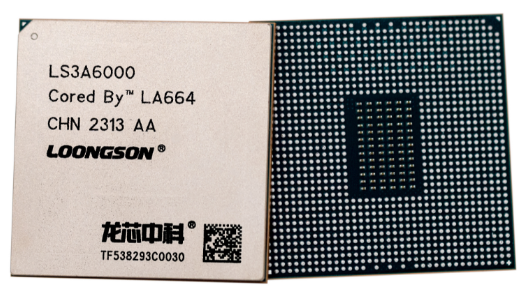
Loongson Unveils 3A6000 CPU, Aims to Match <span style='color:red'>Intel</span>’s Advanced Process in Next Phase
  Loongson Technology Corp Ltd, unveiled its latest domestic CPU, Loongson 3A6000, on November 28th in Beijing, China. Notably, this CPU is entirely based on Chinese in-house design, free from reliance on any foreign licensed technology. During the product launch, Weiwu Hu, the chairman of Loongson, announced that next phase will utilize mature processes to achieve performance comparable to Intel’s advanced process, reported by CTEE.  Loongson 3A6000 adopts a China domestic instruction set architecture(ISA), showcasing China’s capability to self-develop a new generation CPU, as reported by CCTV News. This CPU can run various cross-platform applications, catering to the needs of diverse large and complex desktop scenarios.  The release of the Loongson 3A6000 signifies a pivotal milestone, highlighting China’s achievement in self sufficiency and product performance, bringing it on par with international mainstream products.  According to Mydrivers.com, test results indicate that the overall performance of the Loongson 3A6000 processor is comparable to Intel’s 10th Gen Core quad-core processor launched in 2020. Notably, the Loongson 3A6000 is built on the self-developed ISA “LoongArch,” showcasing complete independence from foreign licensing, from top-level structure to ISA and application binary interface (ABI) standards.  In terms of core performance, the Loongson 3A6000 boasts a main frequency of 2.5GHz, supports 128-bit vector extension (Loongson SIMD eXtension, LSX), and 256-bit advanced vector extension (Loongson Advanced SIMD eXtension, LASX). It also supports simultaneous multi-threading technology (SMT2), featuring a total of 8 logical cores on the entire chip.  Hu highlighted that the 3A6000 has charted a path based on mature processes, optimizing performance through design. This achievement marks comparable performance with Intel and AMD under relatively weaker process conditions. The next step involves continuing to use mature processes to achieve performance levels on par with Intel’s advanced technology.  Regarding the upcoming Loongson 3B6000, Hu mentioned during the third-quarter earnings briefing that Loongson is strategically focused on enhancing efficiency, aiming to reach or approach the performance level of Apple’s CPU for each GHz.
Key word:
Release time:2023-11-29 14:09 reading:1970 Continue reading>>
<span style='color:red'>Intel</span>’s Next Gen CPU to Produce at TSMC with 3nm in First Half of Next Year
  Intel’s upcoming Lunar Lake platform has entrusted TSMC with the 3nm process of its CPU. This marks TSMC’s debut as the exclusive producer for Intel’s mainstream laptop CPU, including the previously negotiated Lunar Lake GPU and high-speed I/O (PCH) chip collaborations. This move positions TSMC to handle all major chip orders for Intel’s crucial platform next year, reported by UDN News.  Regarding this news, TSMC refrained from commenting on single customer business or market speculations on November 21st. Intel has not issued any statements either.  Recent leaks of Lunar Lake platform internal design details from Intel have generated discussions on various foreign tech websites and among tech experts on X (formerly known as Twitter). According to the leaked information, TSMC will be responsible for producing three key chips for Intel’s Lunar Lake—CPU, GPU, and NPU—all manufactured using the 3nm process. Orders for high-speed I/O chips are expected to leverage TSMC’s 5nm production, with mass production set to kick off in the first half of next year, aligning with the anticipated resurgence of the PC market in the latter half of the year.  While TSMC previously manufactured CPUs for Intel’s Atom platform over a decade ago, it’s crucial to note that the Atom platform was categorized as a series of ultra-low-voltage processors, not Intel’s mainstream laptop platform. In recent years, Intel has gradually outsourced internal chips, beyond CPUs, for mainstream platforms to TSMC, including the GPU and high-speed I/O chips in the earlier Meteor Lake platform—all manufactured using TSMC’s 5nm node.  Breaking from its tradition of in-house production of mainstream platform CPUs, Intel’s decision to outsource to TSMC hints at potential future collaborations. This move opens doors to new opportunities for TSMC to handle the production of Intel’s mainstream laptop platforms.  It’s worth noting that the Intel Lunar Lake platform is scheduled for mass production at TSMC in the first half of next year, with a launch planned for the latter half of the year, targeting mainstream laptop platforms. Unlike the previous two generations of Intel laptop platforms, Lunar Lake integrates CPU, GPU, and NPU into a system-on-chip (SoC). This SoC is then combined with a high-speed I/O chip, utilizing Intel’s Foveros advanced packaging. Finally, the DRAM LPDDR5x is integrated with the two advanced packaged chips on the same IC substrate.
Key word:
Release time:2023-11-22 11:18 reading:2604 Continue reading>>
<span style='color:red'>Intel</span>’s CEO Envisions Over One Hundred Million AI PC Shipments in Two Years
  On November 7th, Intel held its “Intel Innovation Taipei 2023 Technology Forum”, with CEO Pat Gelsinger highlighting the healthy state of PC inventory. He also expressed optimism about the injection of several more years of innovative applications and evolution in PCs through AI.  Intel Aims to Ship over One Hundred Million AI PC within the Next Two Years  Gelsinger expressed that the PC inventory has reached a healthy level, and he is optimistic about the future growth of AI PCs, which are equipped with AI processors or possess AI computing capabilities. He anticipates that AI will be a crucial turning point for the PC industry.  Additionally, Gelsinger stated that the server industry may have seemed uneventful in recent years, but with the accelerated development of AI, it has become more exciting. AI is becoming ubiquitous, transitioning from the training phase to the deployment phase, and various platforms will revolve around AI.  Gelsinger expressed his strong confidence in Intel’s position in the AI PC market, expecting to ship over one hundred million units within two years.  Intel’s Ambitious Expansion in Semiconductor Foundry Landscape  Intel is actively promoting its IDM 2.0 strategy, with expectations from the industry that the company, beyond its brand business, has advanced packaging capabilities to support semiconductor foundry operations. In the future, Intel is poised to compete with rivals such as TSMC and Samsung.  Gelsinger noted that some have viewed Intel’s plan of achieving five technical nodes in four years as “an ambitious endeavor.” However, he emphasized that Intel remains committed to its original goal of advancing five process nodes within four years.  The company’s foundry business has received positive responses from numerous potential customers, and while it may take three to four years for significant expansion, the advanced packaging aspect may only require two to three quarters to get on track.  This transformation marks a significant shift for the company, setting new standards in the industry. Intel is making steady progress in its four-year plan to advance five nodes, and Moore’s Law will continue to extend. The construction of Intel’s new factories is also ongoing.  According to Intel’s roadmap, Intel 7 and Intel 4 are already completed, Intel 3 is set for mass production in the latter half of this year, and Intel 20A and 18A are expected to enter mass production in the first and second halves of next year, respectively.
Key word:
Release time:2023-11-08 16:10 reading:2141 Continue reading>>

Turn to

/ 10

  • Week of hot material
  • Material in short supply seckilling
model brand Quote
RB751G-40T2R ROHM Semiconductor
MC33074DR2G onsemi
CDZVT2R20B ROHM Semiconductor
BD71847AMWV-E2 ROHM Semiconductor
TL431ACLPR Texas Instruments
model brand To snap up
BP3621 ROHM Semiconductor
BU33JA2MNVX-CTL ROHM Semiconductor
ESR03EZPJ151 ROHM Semiconductor
TPS63050YFFR Texas Instruments
IPZ40N04S5L4R8ATMA1 Infineon Technologies
STM32F429IGT6 STMicroelectronics
Hot labels
ROHM
IC
Averlogic
Intel
Samsung
IoT
AI
Sensor
Chip

About us

Qr code of ameya360 official account

Identify TWO-DIMENSIONAL code, you can pay attention to

AMEYA360 mall (www.ameya360.com) was launched in 2011. Now there are more than 3,500 high-quality suppliers, including 6 million product model data, and more than 1 million component stocks for purchase. Products cover MCU+ memory + power chip +IGBT+MOS tube + op amp + RF Bluetooth + sensor + resistor capacitance inductor + connector and other fields. main business of platform covers spot sales of electronic components, BOM distribution and product supporting materials, providing one-stop purchasing and sales services for our customers.

Please enter the verification code in the image below:

verification code